

Compare carrier bids on what they will actually cost
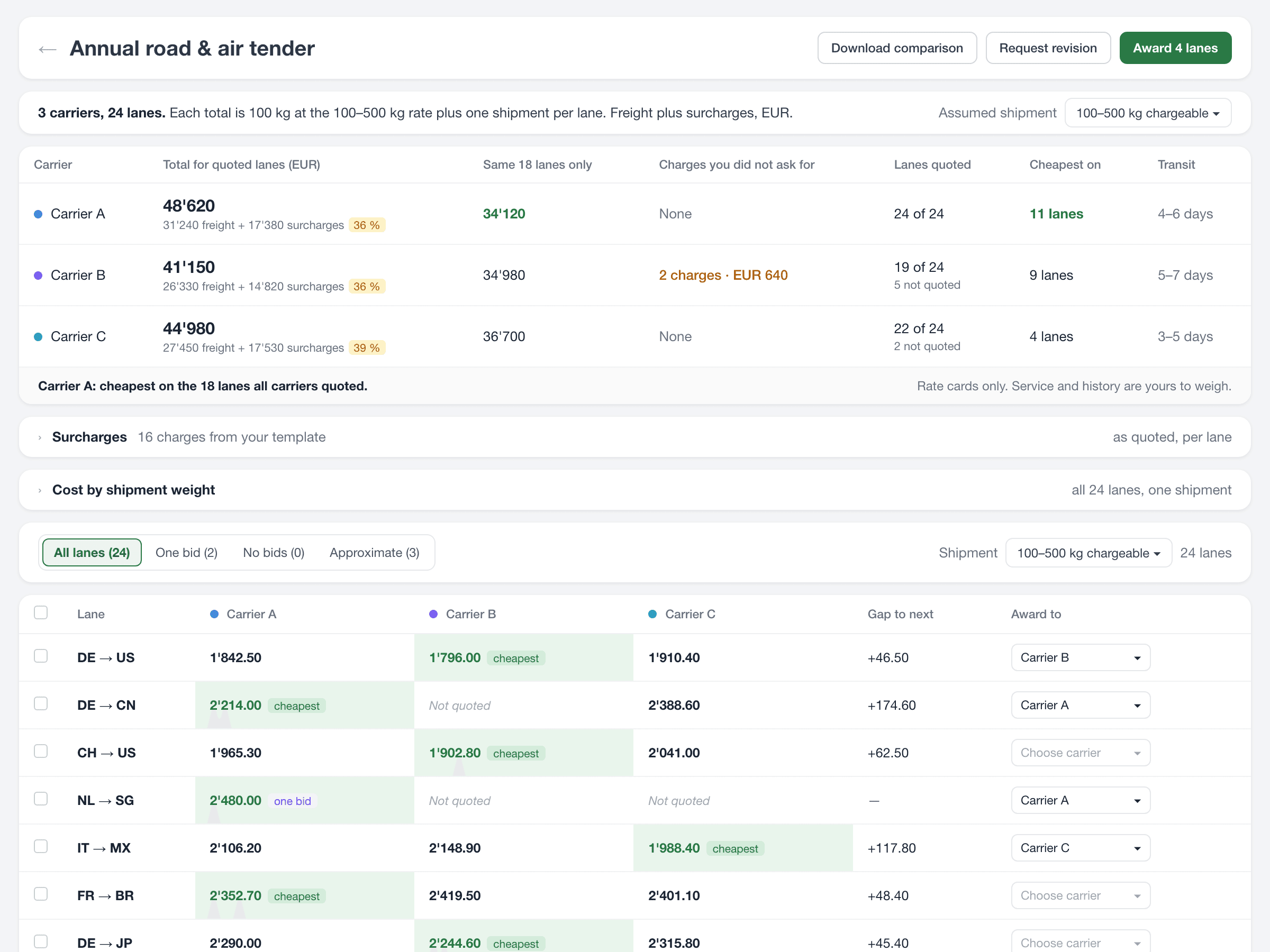
Base rates are the easy part. Surcharges are 30 to 40 percent of what you end up paying, and they are where tender comparisons fall apart. Our RFQ module models both, so the carrier that looked cheapest at bid stage is still the cheapest when the invoices arrive.
Why do tender comparisons miss the real cost?
Because bids are compared on base freight while the surcharges sit in footnotes, structured differently by every carrier. Ocean pre-carriage and on-carriage fuel, container surcharges, air fuel, customs clearance, X-ray, dangerous goods. Each carrier presents them their own way.
We simulate surcharges alongside base freight to approximate the real all-in shipment cost, which is what you are actually buying.
How does the bid comparison work?
We read your carrier rate cards the same way we read your invoices, including regional variations, validity periods, weight brackets, lanes and currencies. Each bid is then broken into its real components: base freight, surcharges, accessorials, the lane and mode it covers, and what it excludes.
You see the bids side by side on lowest comparable all-in cost. Where a carrier has not quoted a lane, that gap is shown rather than treated as a zero, so an incomplete bid never looks like the cheapest one.
How is this different from a tender tool?
Most tender tools compare what carriers say they will charge. Because our RFQ module runs on the same rate card data as your freight audit, it can compare what carriers actually charged you before. The bid and the invoice history sit in one place.
Bids compared with each other, on the carrier's own terms.
Bids compared against your audited invoice history, on the same rate card data.
Do we need to move our bookings into your platform?
No. Intellyse works behind your existing systems. We read your rate cards and your invoices. You keep booking wherever you book today.